
|
These are a few projects that I have come across. If you have anything that you would like to add to this page, please let me know. In addition to these, I have added a new page where I intend to showcase projects that I have built - be they wooden, mechanical or electronic in nature. They are located on the aptly named Stuff I Built page. |
|
|
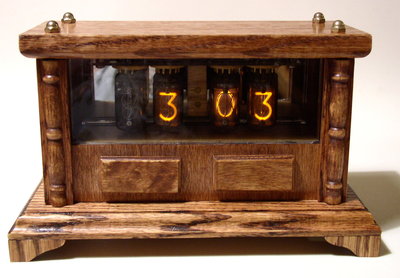
MSP430 Nixie Clock Derek Tombrello - custom design I have always wanted to build a Nixie Clock. This is my version based on my new favorite IC - the Texas Instruments' Value Line MSP430. I hope you enjoy it :) And if you build one of your own, please... email me! |
|
Back to the Top
|
|
|
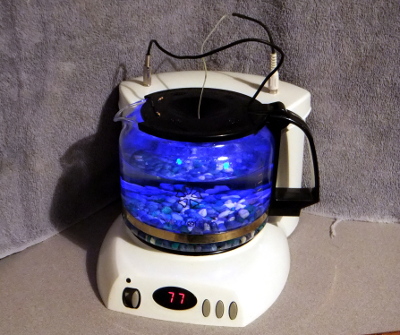
Coffee Pot Fish Tank Derek Tombrello - custom design Using Texas Instruments' Value Line MSP430 microprocessor and a repurposed coffee pot, my girlfriend's Valentine's Day present, a Betta fish, is now kept at a constant tropical temperature all year round. Not to mention it just looks cool! Now you can build your own! I'll show you how... |
|
Back to the Top
|
|
|
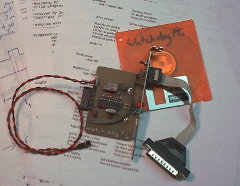
WatchDog PC Derek Tombrello - custom design I designed this probably ten years ago when I was running a small radio station in the neighborhood. I used a computer DJ program to serve up the MP3 files 24/7. More than once, I would come into the shop in the morning, only to find the sound going "dadadadadadadada..." - stuttering because the program had locked up. Enter the WatchDog PC. The circuit, designed around a PIC16F84, acting as the 'parent', sends a request to the computer every so often. If everything is OK, a 'child' program running in the background on the computer acknowledges that everything is fine. If the 'child' doesn't answer, then the circuit assumes that the system has locked up and shorts the reset pins on the motherboard. The software was written for DOS and Windows 9x, but I have included the source code as well so it should be easy enough to modify for newer versions. Also included in the .ZIP file are the original notes I drew up while designing this, the source code to program your own PIC chip and several pictures of my own WatchDog circuit as well as the schematic and PCB layout that I used. Enjoy... |
|
Back to the Top
|
|
|
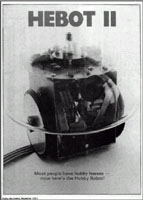
Hebot II Hobby Electronics - November 1982 Not sure how many of you still have a ZX81 computer [as I raise my hand, grinning], but this robot that you build interfaces with that to allow you to write control programs. With very little modification, mostly software, you should be able to use any computer with a parallel port. |
|
Back to the Top
|
|
|
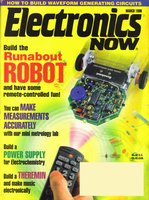
Build the Runabout Robot Electronics Now - March 1996 Build your own 17 function robot that is controlled by any standard universal (or Sony brand television) infrared remote control. Three integrated circuit are needed - MAX756 voltage converter, 24LC26 serial EEPROM and a PIC16C56 for which the necessary source and HEX files are included. |
|
Back to the Top
|
|
|
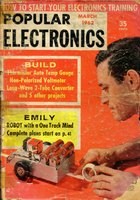
Build Emily - the Robot With a One-Track Mind Popular Electronics - March 1962 Emily is a super simple robot that will follow a line (masking tape works best) laid down on the floor. Dubbed the "Electro-Mechanical Inebriated Ladybug" by the article's author, Emily is sure to be a favorite of all ages. In addition to following a white line, she will also follow you if you aim a flashlight at her. Even though the article is dated, the circuit is still very much viable (say that about a circuit with a microprocessor from 10 years ago!) and simple enough to build in one night. The mechanics might take another night. Set aside a weekend and enjoy! |
|
Back to the Top
|
|

|
Build Mousey the Junkbot Absolute Beginners Guide to Building Robots by Gareth Branwyn This project was highlighted on the Make: web site a while back. I have tried to contact the author for permission to use this with no response. I am including this here with the understanding that I will pull it if requested to do so by the author. Having said that, this is a cute little robot that you can throw together in an evening with parts that any good hobbyist should have laying around :) By utilizing the components from an old mouse, with the addition of only an LM386 amplifier and a 3904 transistor, you can build a light-seeking robot of your own - saving a mouse from the landfill in the process! |
|
Back to the Top
|
|
|
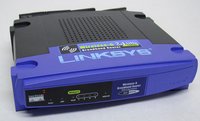
Add Serial Ports to Your Linksys Router
Pulling information from various websites and datasheets, I show you a circuit that you can build to add serial ports to your Linksys WRT54G router. The only active component is a Maxim MAX233. With a link to instructions for using the circuit. You'll want this is you plan on installing Linux on router. Perfect for controlling your next Roomba project! |
|
Back to the Top
|
|

|
My First Tesla Coil Nuts & Volts - September 1999 Using a design in the Nuts & Volts magazine, as well as information found on the internet, I built a Tesla Coil that I am currently able to pull 4 to 5 inch sparks off of and light a small flourescent tube from two feet away without wires! Learn from my mistakes and download the article to build your own. |
|
Back to the Top
|
|
|
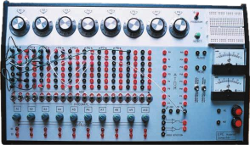
EPE Hybrid Computer
Part 1 |
Part 2 Everyday Practical Electronics - November & December 2002 This hybrid system combines the accuracy of the digital computer with the real-time problem-solving capabilities of the analog systems together into one unit that you can build yourself. Not only will it fit right in with the rest of your Vintage Computer collection - it looks really good! |
|
Back to the Top
|
|

|
How To Build a Working Digital Computer by Edward Alcosser First of all, this book was published in 1967. It is no longer in publication, therefore I do not think there should be a problem with hosting this material for the purpose of preservation. Having said that, this book details how to build a fully functional 'paperclip' computer using items found around most homes. I don't think you'll be surfing the web with it, but still... it's pretty cool. |
|
Back to the Top
|
|
|
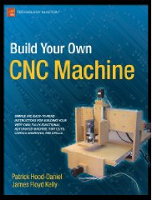
Build Your Own CNC Machine by James Floyd Kelly & Patrick Hood-Daniel Haven't you always wanted your own CNC? Have you been drooling over demo discs and advertisements for hundred thousand dollar commercial machines for years? Then you need this book. When you click on this project, you can take a look at photos of my progress on this fantastic project. You will also be able to go to the book's web site for more information or to purchase your own copy. |
|
Back to the Top
|
|
|
If you are planning on designing and/or building your own robotic friend, then you are going to be needing parts. If you're like me, then you can't always afford to obtain all of the necessary components you need to complete your project. These companies offer free samples of some or most of their products - you just have to ask! 


Or if you are looking for a source for electronics surplus, check out these two sites: 

|
|